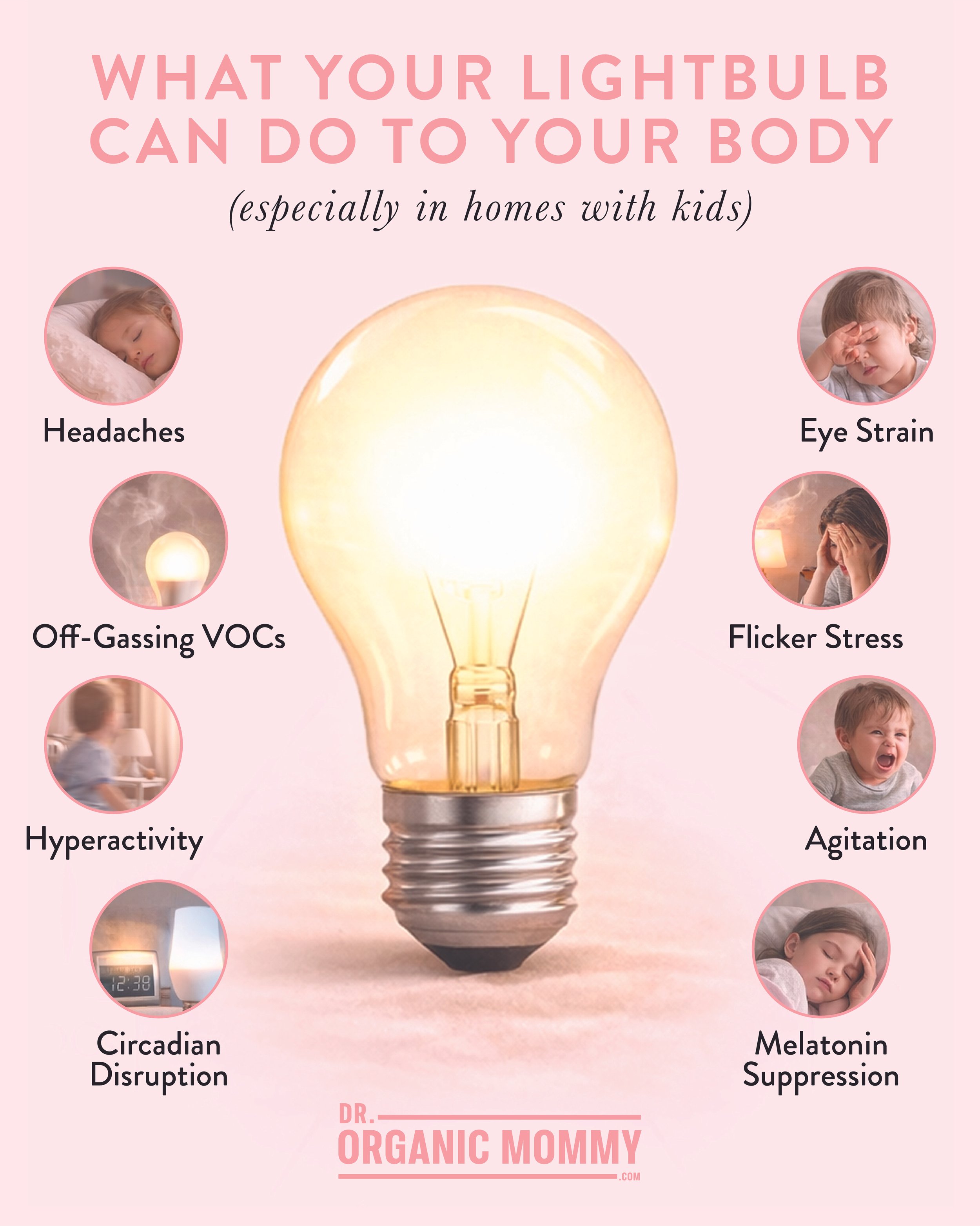
Why Your Light Bulbs Are More Important Than You Might Think
Why Your Light Bulbs Are More Important Than You Might Think
(Especially in homes with kids)
When we talk about creating a healthier home, most parents think about food, furniture, cleaning products, and maybe even water or air. But light?
That’s often overlooked.
Yet light is one of the most powerful signals your body receives every single day. It doesn’t just help you see — it tells your nervous system what time it is, when to be alert, and when it’s safe to rest.
And for kids, whose nervous systems and sleep cycles are still developing, those signals matter even more.
The Light Bulbs We’re Switching To:
After a lot of research (and real-life testing), these are the two lighting options we use and trust in our home:
• Circadian Light Bulb from The Healthy Home Shop
We’re switching to these because they’re designed to support natural circadian rhythms, rather than disrupt them especially in the evening and nighttime hours when most homes are still brightly lit.
Why We’re Making the Switch
This isn’t about fear or replacing every bulb overnight. It’s about understanding how modern lighting differs from the light our bodies evolved with — and making small changes that support regulation, sleep, and overall wellbeing.
Here’s what we’ve learned.
Light Is Biological Information
Your body doesn’t experience light as “bright” or “dim.”
It experiences light as information.
Light tells your brain:
• When to wake up
• When to release melatonin
• When to be alert
• When to wind down
Many conventional LED bulbs emit high levels of blue light, especially at night — the same type of light your body associates with midday sun.
That’s helpful at noon.
It’s not helpful at 8pm.
How Conventional Lighting Can Affect the Body
1. Circadian Rhythm Disruption
Exposure to blue-heavy light in the evening can confuse your internal clock, making it harder for the body to recognize that it’s time to rest.
For kids, whose rhythms are still forming, this disruption can show up as:
• Difficulty falling asleep
• Restless nights
• Earlier wake-ups
• Trouble winding down in the evening
2. Melatonin Suppression
Melatonin is the hormone that signals sleep. Blue light at night can delay or suppress its release, even if you feel tired.
Sleep is when kids (and adults) regulate emotions, grow, and repair. Anything that interferes with that process adds stress to the nervous system.
3. Nervous System Overstimulation
Harsh, overly bright, or flickering light can keep the nervous system in a more activated state.
In real life, that can look like:
• Evening hyperactivity
• Increased agitation
• More emotional reactivity
• Difficulty settling before bed
Light should help the body calm — not fight it.
4. Flicker & Eye Strain
Many bulbs flicker at rates we don’t consciously perceive, but the nervous system still registers.
This can contribute to:
• Eye fatigue
• Headaches
• Nervous system stress
Kids are especially sensitive to these inputs.
Why Circadian-Supportive Bulbs Are Different
The bulbs we use are designed to work with the body instead of against it.
They’re made to:
• Mimic natural light patterns
• Reduce blue light exposure at night
• Support melatonin production
• Create a warmer, calmer evening environment
The goal isn’t darkness — it’s appropriate light at the appropriate time.
You Don’t Have to Do This All at Once
This is important:
You do not need to replace every bulb in your house.
If you’re starting small, focus on:
• Bedrooms
• Nurseries
• Evening living spaces
• Anywhere your family spends time winding down
Even changing lighting in one or two rooms can make a noticeable difference.
The Bigger Picture
We think a lot about regulation for our kids — routines, boundaries, connection, sleep.
But our environment regulates us too.
When your home supports your body’s rhythms, evenings feel softer. Bedtime feels less charged. And everyone’s nervous system has a better chance to settle.
Light isn’t neutral.
It’s information.
And choosing better lighting is one of the simplest, quietest ways to support your family’s health.