Less-Toxic Coffee Makers
Coffee We Love
Before we get into coffee makers - we have to mention our favorite coffee. Fabula coffee is the best! It is mold free, easy on the gut and they are completely clean.
Less-Toxic Coffee Makers
Before we talk about what to avoid, let’s start with what does work.
There are two coffee makers I personally feel comfortable using and recommending, and both have something very important in common:
they are completely plastic-free where hot water touches coffee.
I’ll link them here so you can explore them yourself:
• Plastic Free Automatic Coffee Maker -Really one of the only coffee makers where no plastic touches the coffee. We’ve been enjoying this one. Just a couple things to note: it does require paper filters (they include some with your order), and it doesn’t have a timer setting—something you may be used to with other automatic coffee makers.
• All glass pour over cofee maker - Stainless steel, no filters required—but it’s not automatic, which I know many people prefer.
Also this fully glass pour over
Another option we’re trying is a bit pricier, but it promises a fully plastic-free automatic coffee experience:
We love the look of this coffee maker and the ease of use. It doesn’t keep the coffee hot so note that. These options minimize exposure by using materials like stainless steel, glass, and ceramic instead of plastic in the brewing pathway. That matters more than most people realize, especially if you drink coffee every day.
Now let’s talk about why this matters.
Why Coffee Makers Deserve a Second Look
Coffee is one of the most frequently consumed hot beverages. For many people, it’s a daily ritual, sometimes multiple times a day. That frequency makes the materials used in your coffee maker especially important.
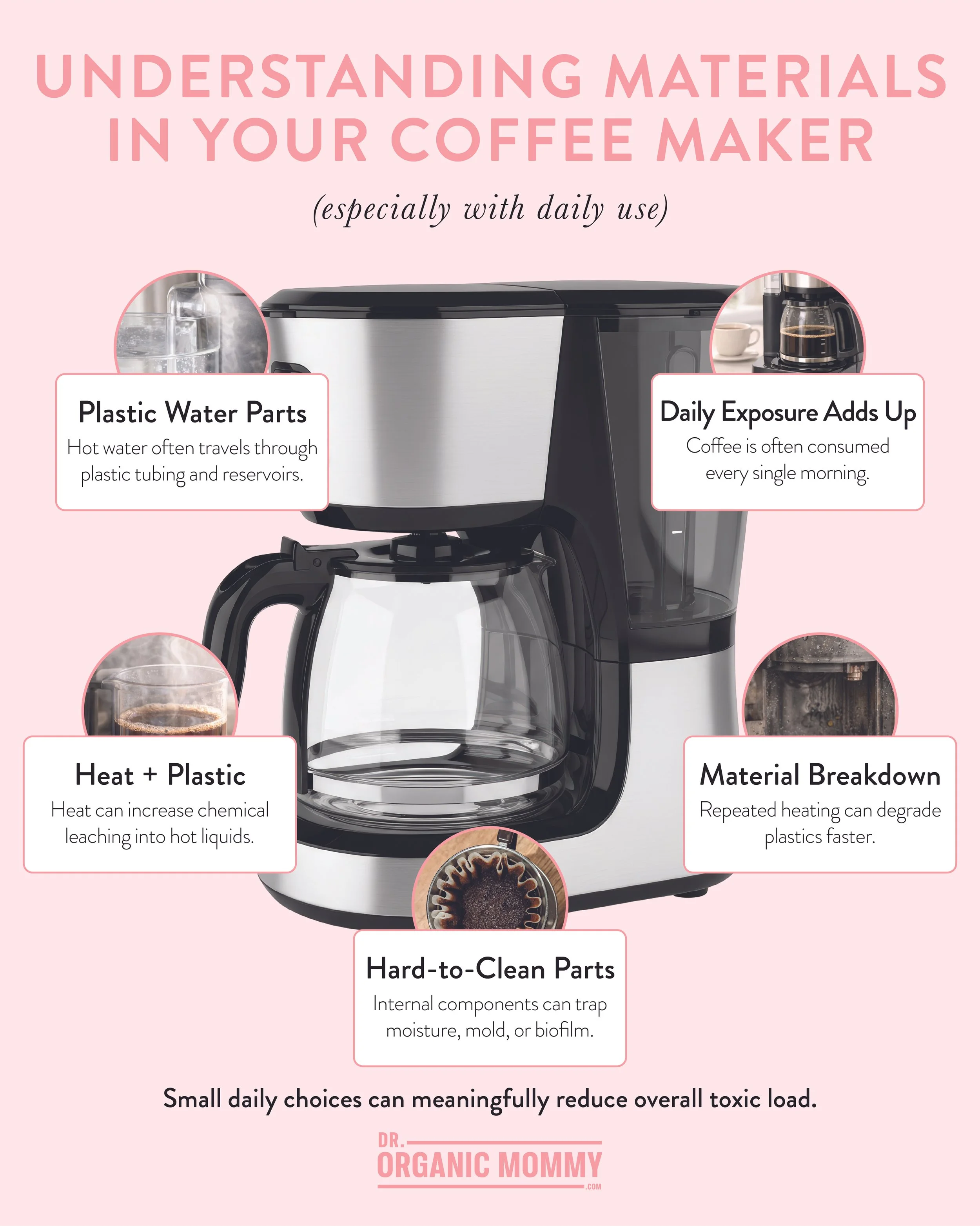
Most automatic coffee makers on the market contain plastic components in areas where hot water travels. Heat changes how materials behave, and repeated daily exposure can add up over time.
This doesn’t mean coffee is bad. It means how we brew it matters.
Hot Water and Plastic: What’s the Concern
In many standard coffee machines, hot water flows through:
• Plastic tubing
• Plastic reservoirs
• Plastic heating components
• Plastic drip mechanisms
When plastic is exposed to high heat repeatedly, it can break down faster and increase the chance of chemicals migrating into liquids.
This is especially relevant with coffee because it is both hot and acidic, two factors that can increase material breakdown.
Daily Exposure Adds Up
One cup of coffee from a plastic coffee maker is not the issue.
It’s the repetition.
Coffee is often consumed every single morning, sometimes for decades. Small exposures repeated daily are very different from occasional contact.
This is why I focus so much on low-effort swaps that reduce daily toxic load rather than chasing perfection.
Hard-to-Clean Parts and Hidden Build Up
Another overlooked issue with many automatic coffee makers is cleaning.
Internal components can trap moisture, coffee residue, and oils. Over time, this can lead to:
• Mold growth
• Biofilm buildup
• Bacterial residue
Even with regular cleaning, some internal areas are nearly impossible to fully dry or access.
This doesn’t mean your coffee maker is unsafe, but it does mean it deserves more attention than most of us give it.
Why Plastic Free Options Matter
Plastic free coffee makers reduce several concerns at once:
• No plastic contact with hot water
• Fewer materials that degrade with heat
• Easier to visually inspect and clean
• Fewer hidden internal components
They are often simpler by design, which is a good thing.
Small Changes, Meaningful Impact
This is not about fear.
It’s about awareness.
Coffee is something many of us enjoy every day. Choosing a coffee maker made with safer materials is a one time decision that reduces exposure long term.
You don’t have to give up coffee.
You don’t have to overhaul your entire kitchen.
You just have to make informed choices where it counts.